Images and Videos of the Sun
Images and Videos Courtesy of NASA/SDO and the AIA, EVE, and HMI science teams


Image Slideshow



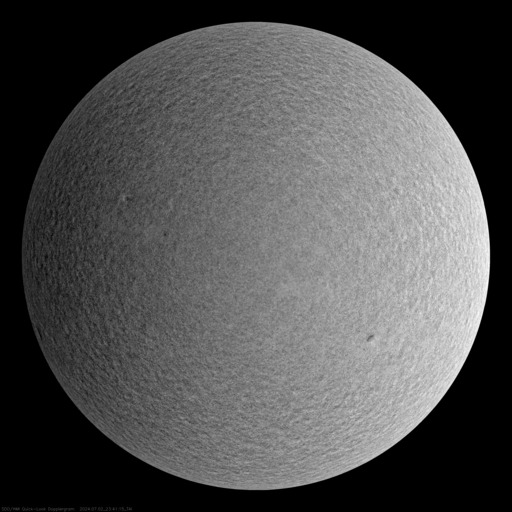
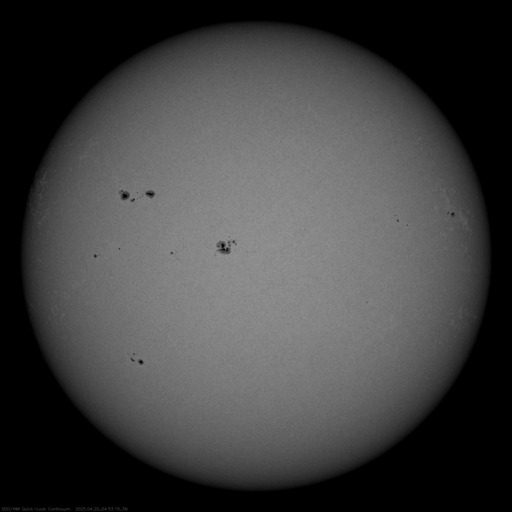


AIA 193
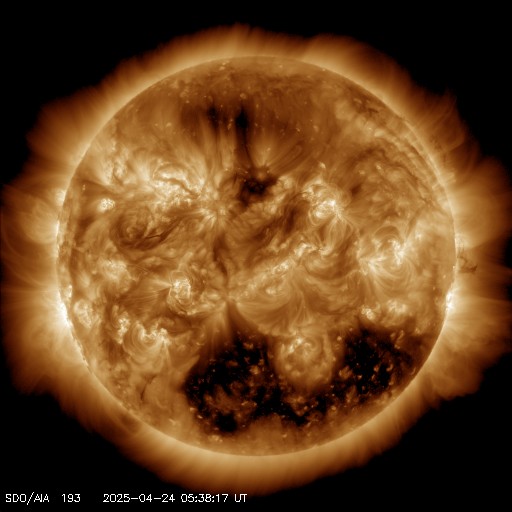
Where: Corona and hot flare plasma
Wavelength: 193 angstroms (0.0000000193 m) = Extreme Ultraviolet
Primary ions seen: 11 times ionized iron (Fe XII)
Characteristic temperature: 1.25 million K (2.25 million F)
This channel highlights the outer atmosphere of the Sun - called the corona - as well as hot flare plasma. Hot active regions, solar flares, and coronal mass ejections will appear bright here. The dark areas - called coronal holes - are places where very little radiation is emitted, yet are the main source of solar wind particles.
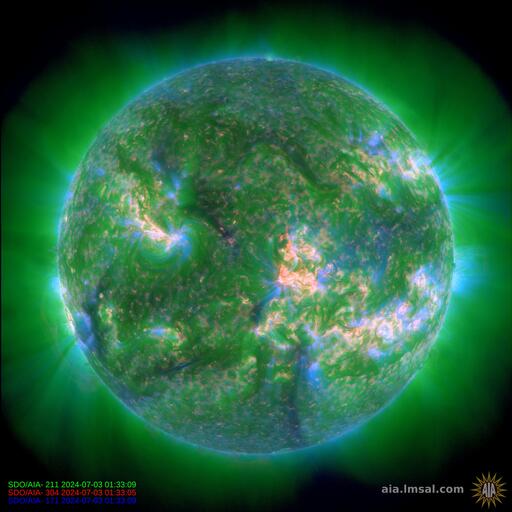
AIA 304
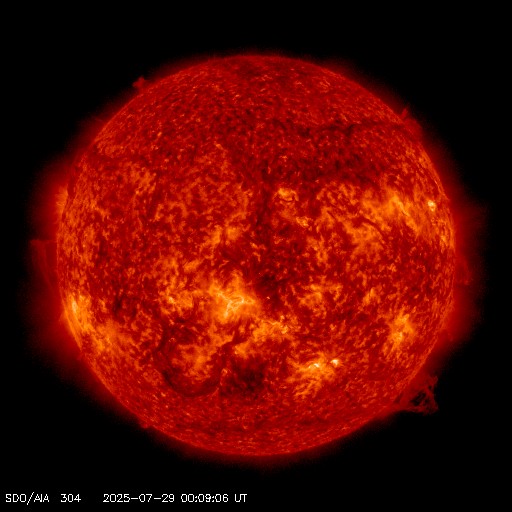
Where: Upper chromosphere and lower transition region
Wavelength: 304 angstroms (0.0000000304 m) = Extreme Ultraviolet
Primary ions seen: singly ionized helium (He II)
Characteristic temperature: 50,000 K (90,000 F)
This channel is especially good at showing areas where cooler dense plumes of plasma (filaments and prominences) are located above the visible surface of the Sun. Many of these features either can't be seen or appear as dark lines in the other channels. The bright areas show places where the plasma has a high density.
AIA 171
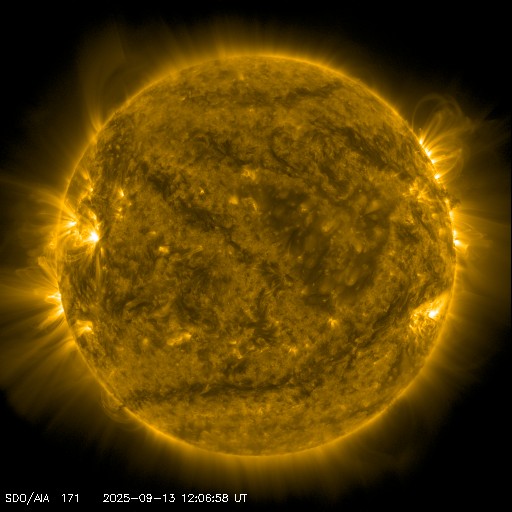
Where: Quiet corona and upper transition region
Wavelength: 171 angstroms (0.0000000171 m) = Extreme Ultraviolet
Primary ions seen: 8 times ionized iron (Fe IX)
Characteristic temperature: 1 million K (1.8 million F)
This channel is especially good at showing coronal loops - the arcs extending off of the Sun where plasma moves along magnetic field lines. The brightest spots seen here are locations where the magnetic field near the surface is exceptionally strong.
AIA 211
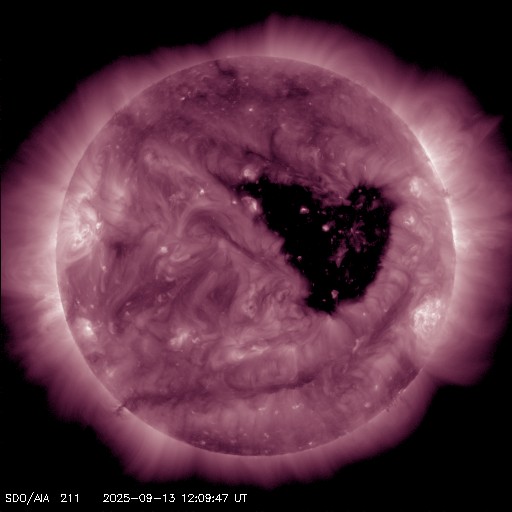
Where: Active regions of the corona
Wavelength: 211 angstroms (0.0000000211 m) = Extreme Ultraviolet
Primary ions seen: 13 times ionized iron (Fe XIV)
Characteristic temperature: 2 million K (3.6 million F)
This channel (as well as AIA 335) highlights the active region of the outer atmosphere of the Sun - the corona. Active regions, solar flares, and coronal mass ejections will appear bright here. The dark areas - called coronal holes - are places where very little radiation is emitted, yet are the main source of solar wind particles.
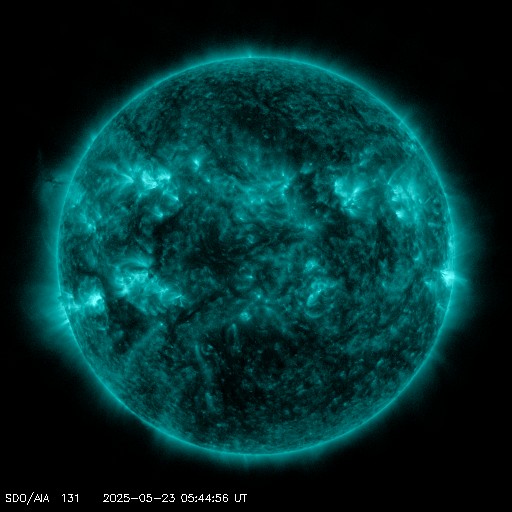
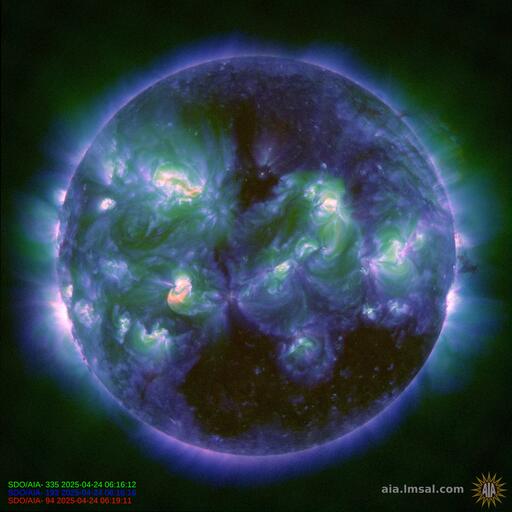
AIA 131
Where: Flaring regions of the corona
Wavelength: 131 angstroms (0.0000000131 m) = Extreme Ultraviolet
Primary ions seen: 20 and 7 times ionized iron (Fe VIII, Fe XXI)
Characteristic temperatures: 10 million K (18 million F)
This channel (as well as AIA 094) is designed to study solar flares. It measures extremely hot temperatures around 10 million K (18 million F), as well as cool plasmas around 400,000 K (720,000 F). It can take images every 2 seconds (instead of 10) in a reduced field of view in order to look at flares in more detail.
AIA 335
Where: Active regions of the corona
Wavelength: 335 angstroms (0.0000000335 m) = Extreme Ultraviolet
Primary ions seen: 15 times ionized iron (Fe XVI)
Characteristic temperature: 2.8 million K (5 million F)
This channel (as well as AIA 211) highlights the active region of the outer atmosphere of the Sun - the corona. Active regions, solar flares, and coronal mass ejections will appear bright here. The dark areas - or coronal holes - are places where very little radiation is emitted, yet are the main source of solar wind particles.
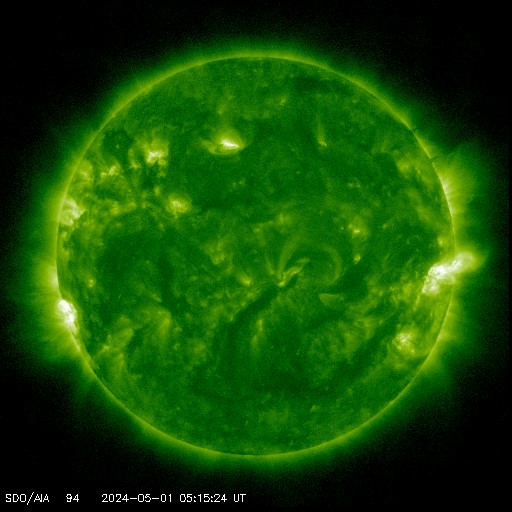
AIA 094
Where: Flaring regions of the corona
Wavelength: 94 angstroms (0.0000000094 m) = Extreme Ultraviolet/soft X-rays
Primary ions seen: 17 times ionized iron (Fe XVIII)
Characteristic temperature: 6 million K (10.8 million F)
This channel (as well as AIA 131) is designed to study solar flares. It measures extremely hot temperatures around 6 million Kelvin (10.8 million F). It can take images every 2 seconds (instead of 10) in a reduced field of view in order to look at flares in more detail.
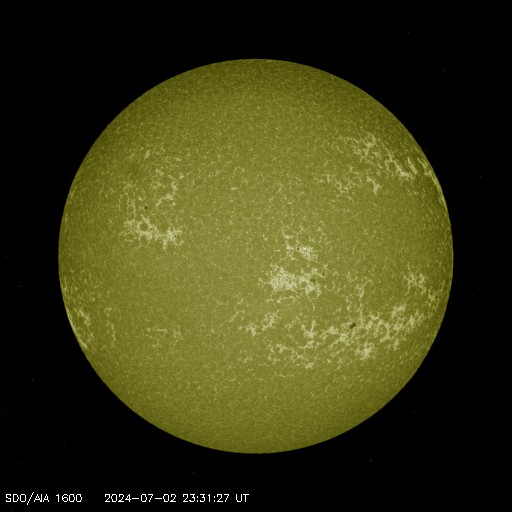
AIA 1600
Where: Transition region and upper photosphere
Wavelength: 1600 angstroms (0.00000016 m) = Far Ultraviolet
Primary ions seen: thrice ionized carbon (C IV) and Continuum
Characteristic temperatures: 6,000 K (11,000 F), and 100,000 K (180,000 F)
This channel (as well as AIA 1700) often shows a web-like pattern of bright areas that highlight places where bundles of magnetic fields lines are concentrated. However, small areas with a lot of field lines will appear black, usually near sunspots and active regions.
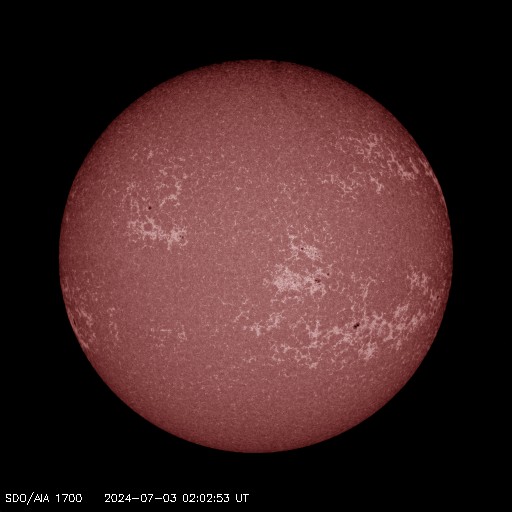
AIA 1700
Where: Temperature minimum and photosphere
Wavelength: 1700 angstroms (0.00000017 m) = Far Ultraviolet
Primary ions seen: Continuum
Characteristic temperature: 6,000 K (11,000 F)
This channel (as well as AIA 1600) often shows a web-like pattern of bright areas that highlight places where bundles of magnetic fields lines are concentrated. However, small areas with a lot of field lines will appear black, usually near sunspots and active regions.
Never base important decisions on this or any weather information obtained from the Internet.
Always have a backup method of receiving weather information such as a battery powered weather radio.
Copyright © 2026 DaculaWeather.com
