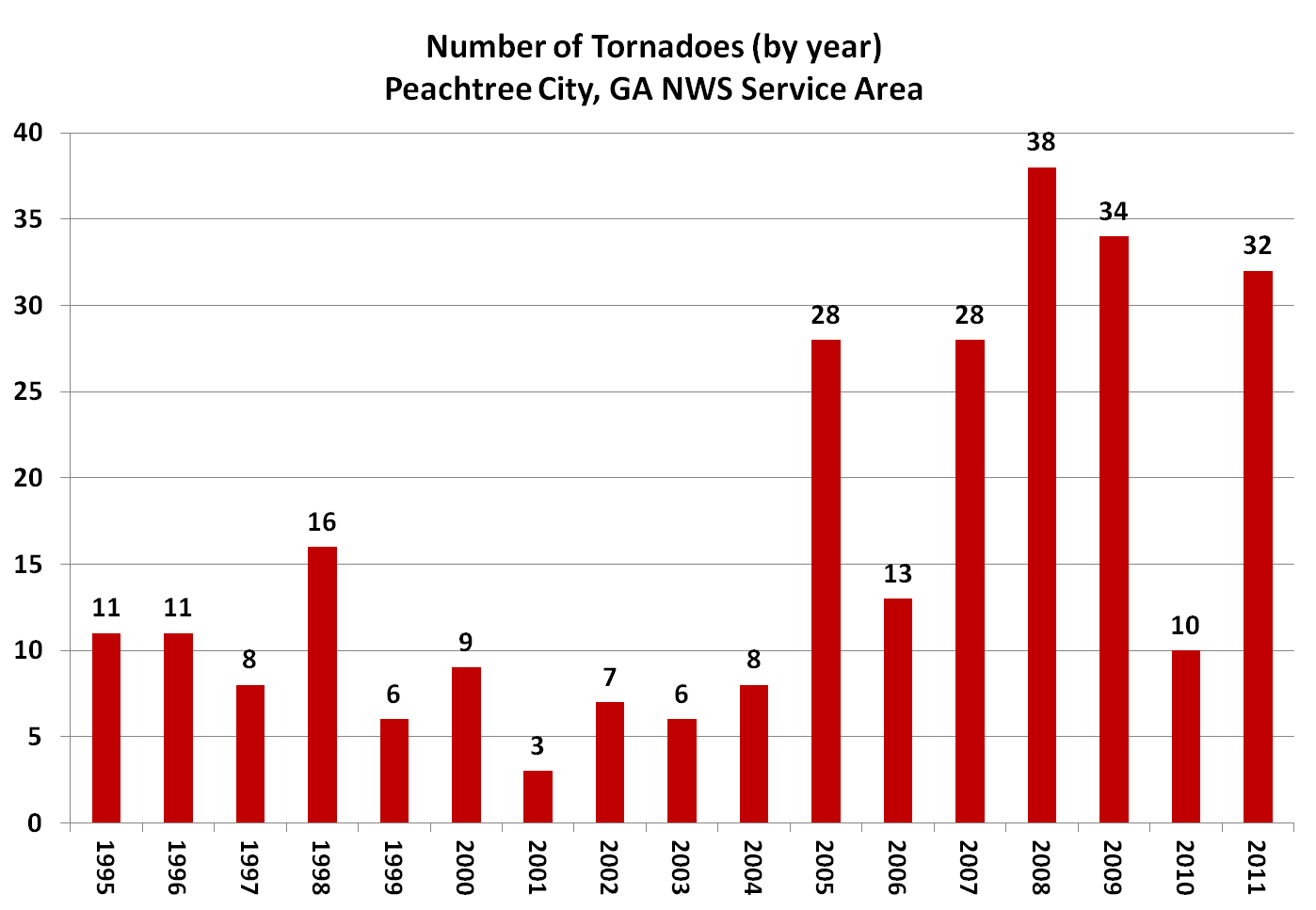
Georgia Severe Weather Climatology
Georgia's severe weather season is essentially year-round but peaks dramatically in spring (March-May), when the state ranks among the top in the U.S. for tornadoes, large hail, damaging winds, and flash flooding. April is typically the deadliest month for tornadoes (highest monthly count), followed by March and May, driven by high instability (CAPE 2000-4000+ J/kg), strong shear (40-70+ kt), and frequent frontal passages (drylines, cold fronts, warm fronts) that spawn supercells and outbreaks (e.g., April 27-28, 2011 Super Outbreak with 36 tornadoes and 20 deaths in Georgia).
Summer (June-August) brings frequent thunderstorms with damaging winds, lightning (Georgia ranks top 5-10 nationally), and heavy rain/flash flooding, especially in north Georgia mountains due to orographic enhancement. Fall (September-November) features heavy rain/flooding risks (e.g., September 2009 Epic Atlanta Flood) and occasional tornadoes, often from tropical remnants or cold fronts. Winter (December-February) is the quietest season for severe thunderstorms/tornadoes (almost none), with the main threats being ice storms, freezing rain, and rare snow/ice events (north Georgia mountains see 3-8 inches seasonal snow on average, with ice often more damaging statewide).
Overall, Georgia averages 25-40 tornadoes per year (mostly EF0-EF2, peak March-May), dozens of severe thunderstorm days, frequent hail, and widespread flash flooding risk, making severe weather a constant concern, especially in spring.
Primary Severe Weather Seasons in Georgia
-
Spring Severe Weather Peak (March - May)
- Dominant Threat: Tornadoes, large hail, damaging winds, and flooding.
- Why: Strongest instability (high CAPE), strong shear, and frequent frontal passages (dryline, cold fronts, warm fronts).
- Tornado Climatology: Georgia averages About 25-40 tornadoes per year (EF0-EF4/EF5). Peak month is April wih the highest numbers and April highest intensity.
- Notable Outbreaks: April 27-28, 2011 (Super Outbreak, 36 tornadoes in GA, 20 deaths); March 2007 (Atlanta EF2); April 2009 (multiple EF2-EF3).
- North Georgia: Mountains/foothills often see fewer but stronger tornadoes due to terrain channeling; Atlanta metro sees urban flash flooding.
-
Summer Severe Weather (June - August)
- Dominant Threat: Damaging winds (downbursts), frequent lightning, heavy rain/flooding, and occasional tornadoes (usually weak EF0-EF1).
- Why: High heat/humidity drives afternoon thunderstorms; sea breeze boundaries and outflow boundaries trigger storms.
- Tornado Climatology: Lower count (About 5-10 per month), mostly brief/weak.
- Flooding: Frequent flash floods from slow-moving storms (e.g., 5-10+ inches in hours).
- North Georgia: Thunderstorms common in afternoons; mountains enhance rainfall.
-
Fall Severe Weather Peak (September - November)
- Dominant Threat: Heavy rain/flooding, occasional strong tornadoes, and rare late-season outbreaks.
- Why: Gulf moisture + frontal systems; tropical remnants (hurricanes/tropical storms) bring heavy rain.
- Tornado Climatology: Rare but possible (e.g., from tropical systems or cold fronts).
- Notable Outbreaks: September 2009 Epic Atlanta Flood (10–20+ inches rain, $500M+ damage).
- North Georgia: Flooding risk high in mountains due to orographics.
-
Winter Severe Weather (December - February)
- Dominant Threat: Ice storms, freezing rain, sleet, and occasional heavy snow.
- Why: Cold air outbreaks + Gulf moisture produce wintry mix; rare strong storms (e.g., 1989 Christmas snow, 2014 Snowmageddon).
- Tornadoes: Very rare (almost none); threat is ice/snow.
- North Georgia: Highest snow/ice risk in state (mountains/foothills); Atlanta metro sees more ice than snow.
Annual Averages for Georgia (NOAA/NWS)
-
Dominant Threat: Tornadoes 25-40 per year (peak March–May; most EF0–EF1; rare EF4–EF5).The average number of tornado days is 6 per year. While tornadoes have been reported in all months of the year, most occur in the March-April-May time frame. During this "tornado season" the most likely time of occurrence is from mid afternoon through early evening.
Tornado intensities of F2 or greater are involved in 37% of the events when the data are broken down into a county-by-county basis. These strong tornadoes are more likely to occur during the month of April than in any other month. During the period 1950 - 1993, 72 people lost their lives in tornadoes. Almost 1700 were injured. - Severe Thunderstorm Days: About 30-40 days/year.
- Damaging Winds: Damaging winds occur, on average, 19 days per year. These events have taken place in every month of the year, but tend to be most frequent during the spring and summer months. The peak month is July during which more than 500 events were reported over the past 40 years. During the favored months, the most likely time of day for wind damage is mid afternoon through early evening.
- Hail Events: Frequent (especially north/central GA). Large hail pelts the CWA on average 7 days per year. April is the month of peak occurrence, but many episodes have also been reported in the other spring and summer months. During this active period, the most likely time of occurrence is from mid afternoon through early evening.
- Flooding: Common (flash floods, river flooding); north Georgia mountains prone to flash flooding.
- Lightning: Georgia ranks top 5–10 nationally for lightning strikes.
- Deadliest Threats: Tornadoes (spring) and flooding (year-round, especially fall).
North Georgia Specifics
- Mountains/foothills (e.g., Nelson, Blairsville, Dahlonega): More snow/ice in winter, enhanced rainfall/tornado risk in spring/fall due to orographics.
- Atlanta metro fringe/north suburbs: Urban flash flooding common in spring/fall; ice/snow impacts in winter.
Summary of Seasonal Threat Levels
- Highest Risk: Spring (March-May) - Tornadoes, hail, wind, flooding.
- Secondary Risk: Summer (June-August) Thunderstorms, flooding.
- Fall (Sept-Nov): Frequent (especially north/central GA).
- Flooding: Heavy rain/flooding, occasional tornadoes.
- Winter (Dec-Feb): Ice/snow/freezing rain.
Bottom Line
Georgia's severe weather season is essentially year-round, but spring is the most dangerous for tornadoes, while winter brings the rare but impactful ice/snow events. North Georgia often sees amplified impacts from terrain (mountains enhance rain/snow; valleys channel cold air).
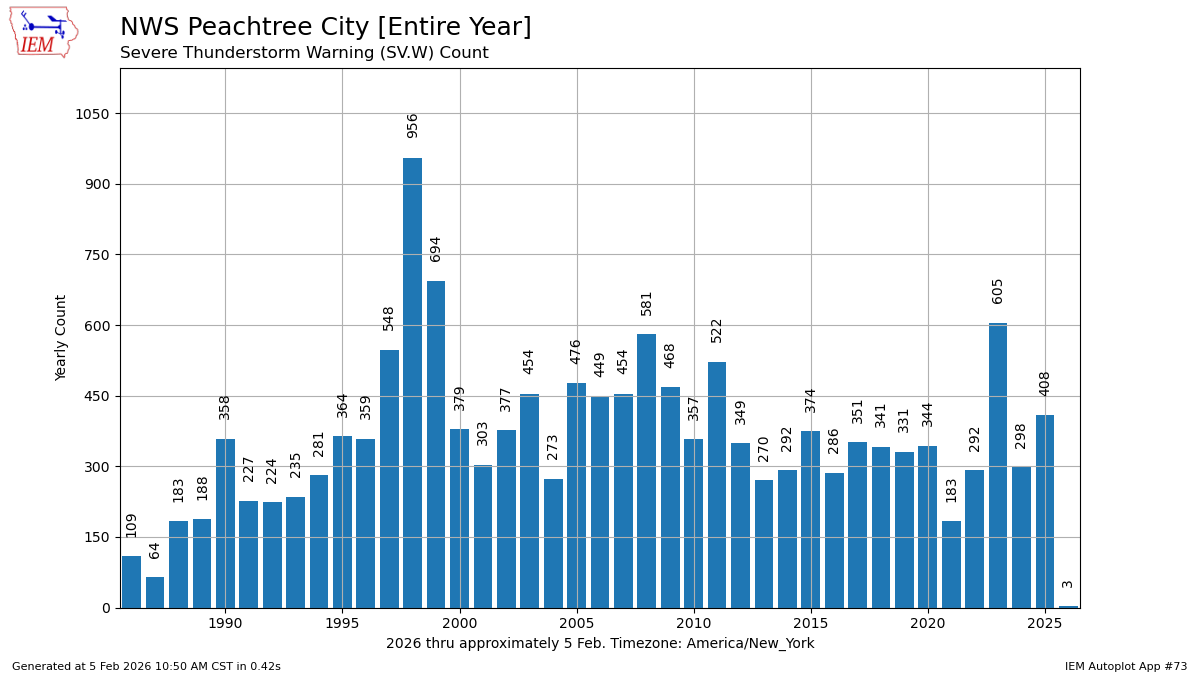
Severe Thunderstorm WARNINGS by Year Issued by NWS Atlanta
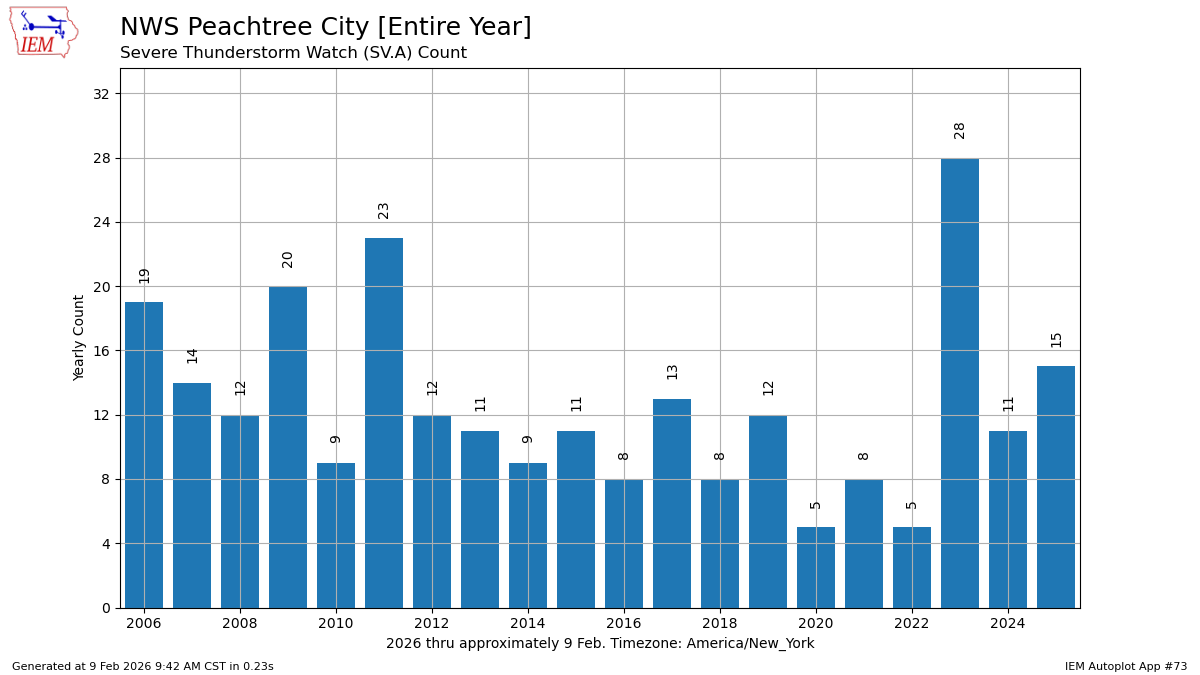
Severe Thunderstorm WATCHES by Year Issued by NWS Atlanta
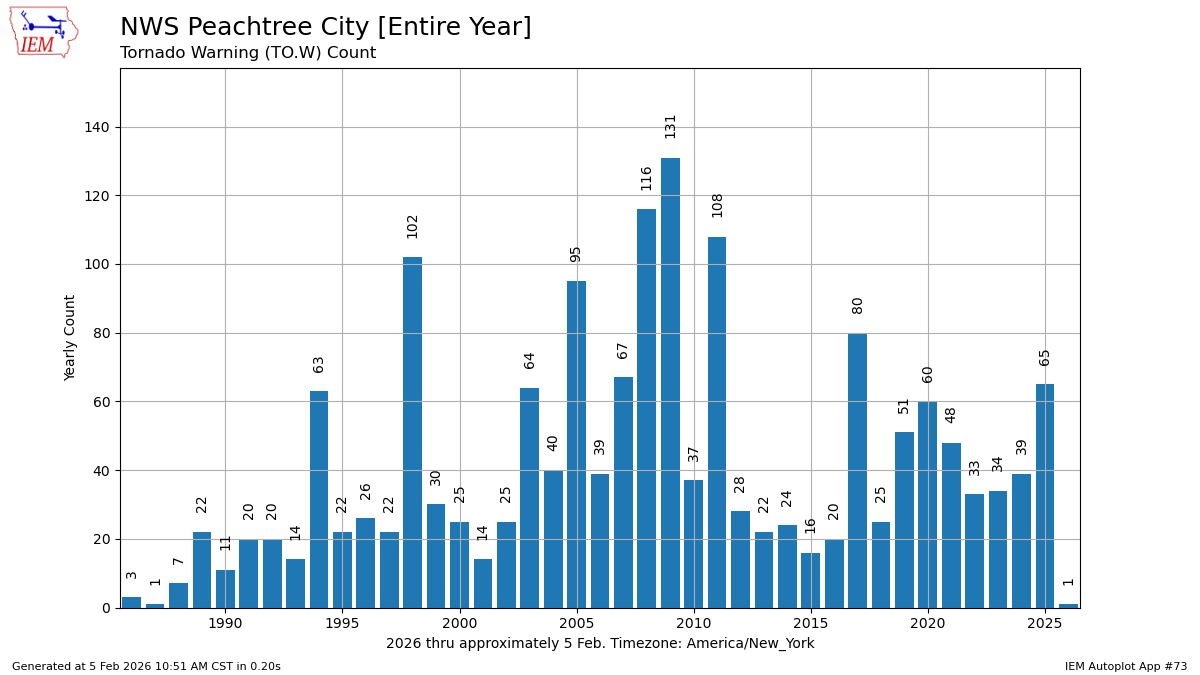
Tornado WARNINGS by Year Issued by NWS Atlanta
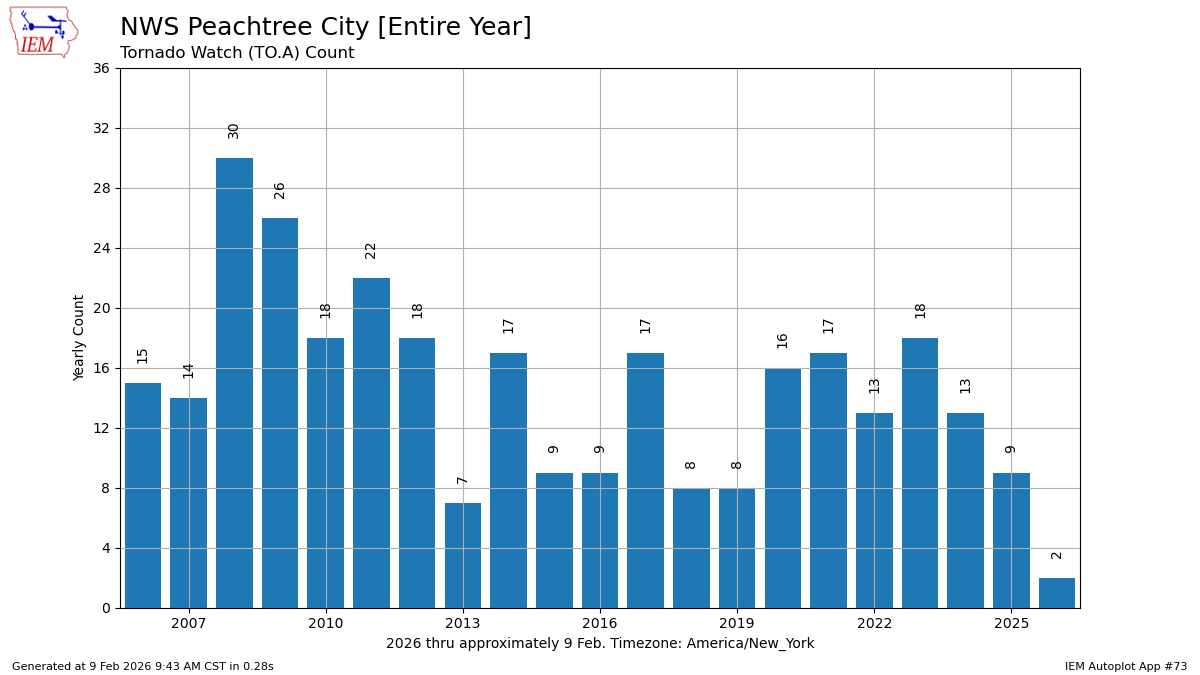
Tornado WAATCHES by Year Issued by NWS Atlanta
Georgia Tornadoes by County
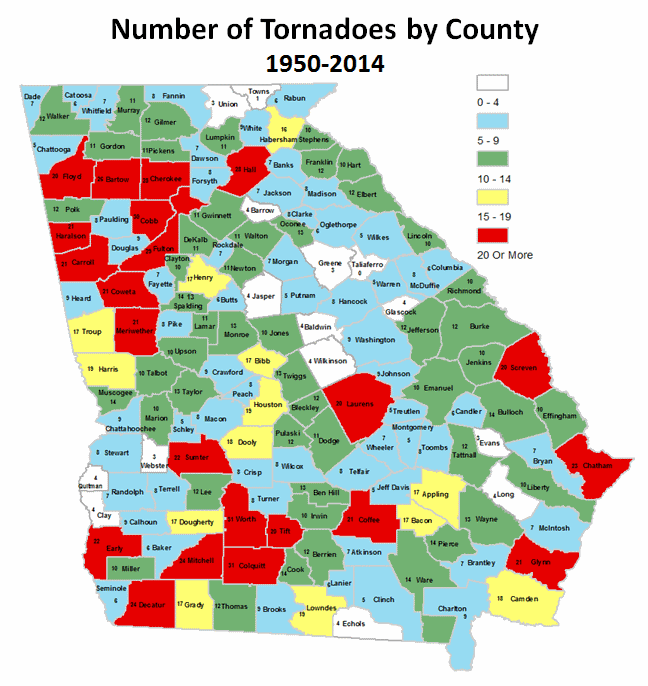
Georgia Tornadoes by County
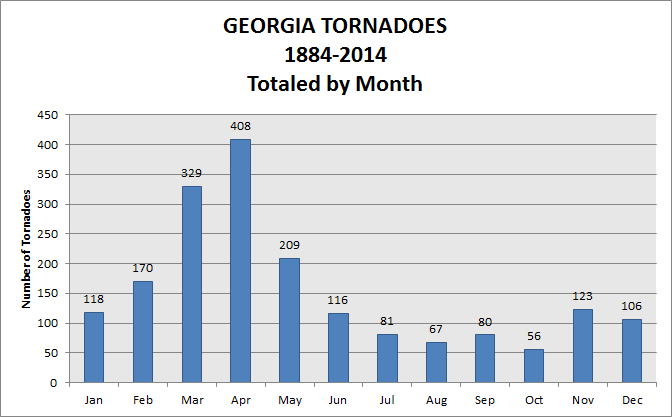
Georgia Total Tornadoes by Year